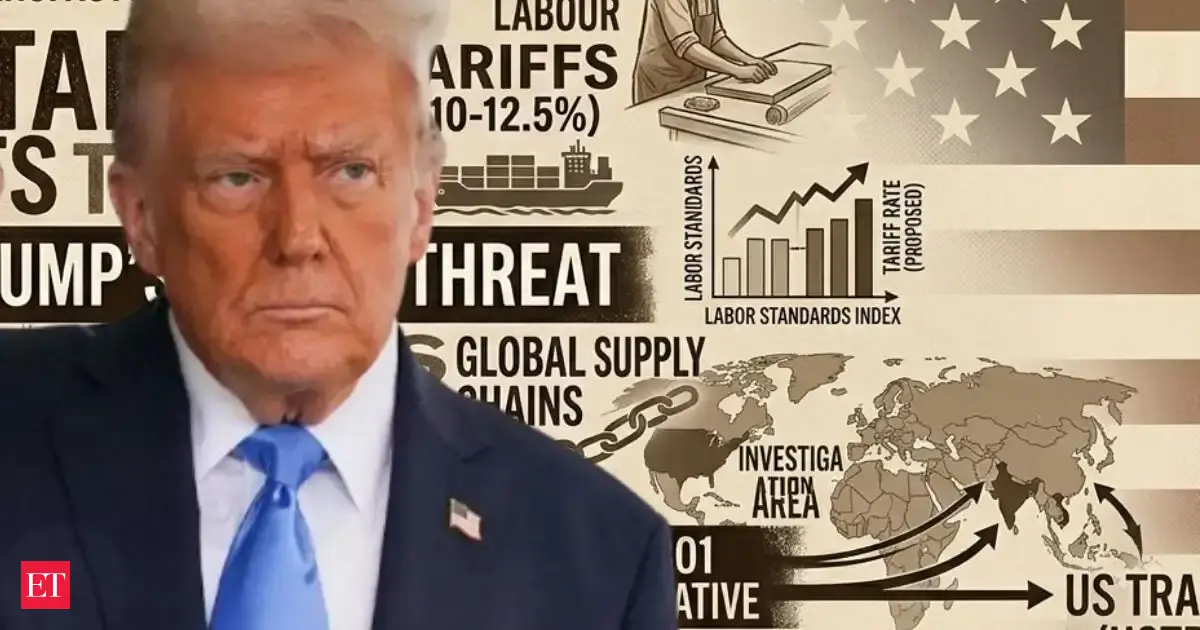
The United States has lowered the tariff on most Indian exports to 10%, down from the previously proposed 12.5%, in a move linked to its Section 301 forced-labour review. The change gives India a measure of relief at a time when exporters are closely watching US trade policy and how it affects access to one of their biggest markets.
A key reason India appears to have received this breather is its recent action against imports tied to forced labour concerns. Based on the available details, Washington seems to have taken those steps into account while easing the tariff level for a broad set of Indian goods. That does not remove the wider investigation backdrop, but it does reduce the immediate cost burden on many shipments.
For Indian exporters, the cut matters because even a small reduction in duty can improve pricing in competitive categories. With tariffs set lower than earlier proposed, Indian products may now be in a stronger position against goods from rival supplying countries. That could help preserve margins for exporters or allow them to price more aggressively in the US market.
At the same time, the relief is not a blanket reset for every industry. The description indicates that some sectors will still face pressure, meaning parts of India’s export basket may continue to deal with higher trade risk or less benefit from the change. So while the tariff reduction is a positive signal for India-US trade, its full impact will depend on which products qualify for the lower rate and which do not.