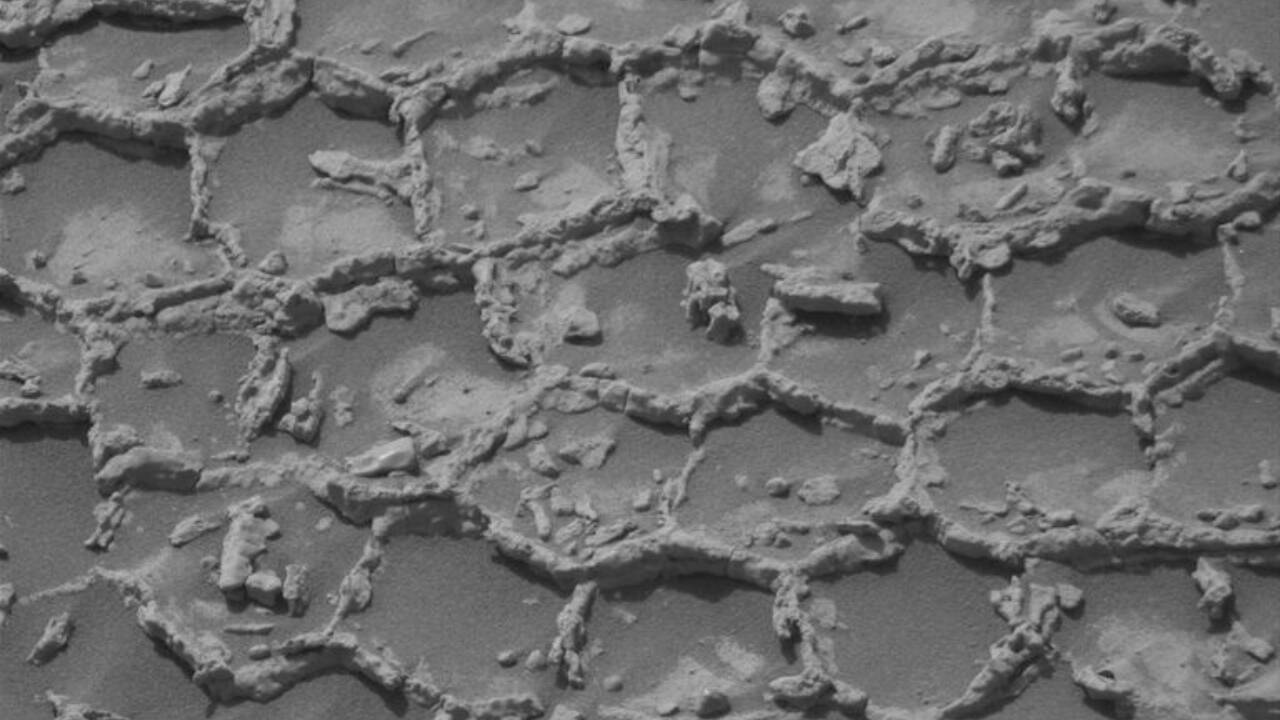
NASA’s Curiosity rover has reportedly detected a strange honeycomb-like pattern on the surface of Mars, adding another mystery to the long-running mission on the Red Planet. The unusual formation has drawn attention because scientists do not yet have a clear explanation for how it developed.
The finding is especially notable because Curiosity has been studying Mars for years, helping researchers piece together the planet’s ancient environment and geology. Even after more than a decade on the Martian surface, the rover continues to uncover features that challenge current understanding.
Based on the report, the newly spotted structure stands out for its repeating, honeycomb-style appearance. That kind of pattern could offer clues about past geological activity, weathering, or other natural processes, but its exact origin remains uncertain.
The discovery highlights how Mars still holds many unanswered questions despite years of robotic exploration. As scientists examine data from Curiosity more closely, the unusual pattern could become an important new clue in understanding the planet’s complex history.