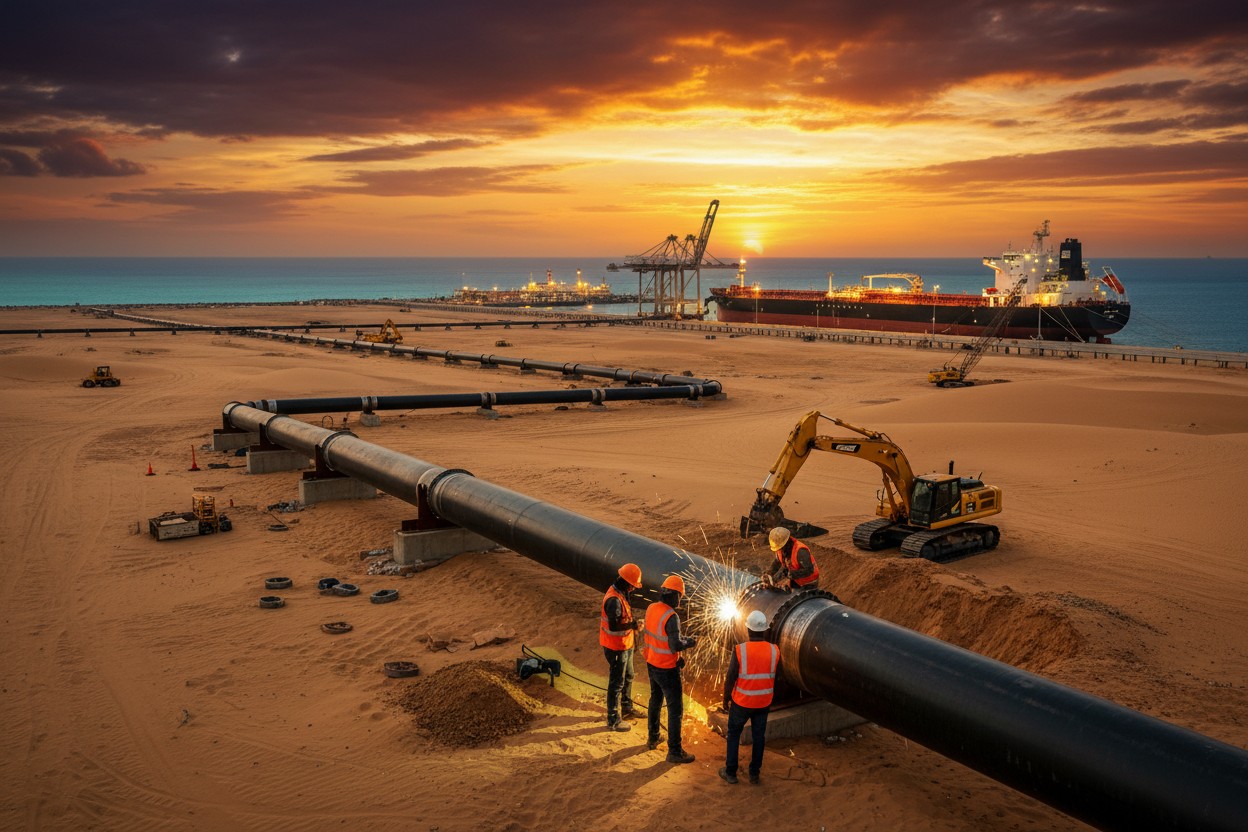
Persian Gulf states have reportedly raised a record $112 billion in international debt markets this year to fund infrastructure designed to reduce reliance on the Strait of Hormuz. The financing surge, cited in a report using Bloomberg-compiled data, points to a major shift in how the region is preparing for trade and energy disruptions.
The borrowing drive comes as the Iran war and broader regional tensions sharpen concern over the security of one of the world’s most important maritime chokepoints. By putting fresh capital into alternative routes and related projects, Gulf governments appear to be trying to limit the economic risks tied to any interruption in Hormuz traffic.
The scale of the fundraising also highlights how quickly strategic infrastructure has become a top priority. Access to international debt markets is giving these states a way to move large projects forward without waiting for a calmer geopolitical environment.
For investors and energy markets, the record debt issuance is another sign that Gulf states are treating transport resilience and export flexibility as urgent goals. The reported $112 billion figure underscores how regional conflict is now influencing both borrowing patterns and long-term infrastructure planning.