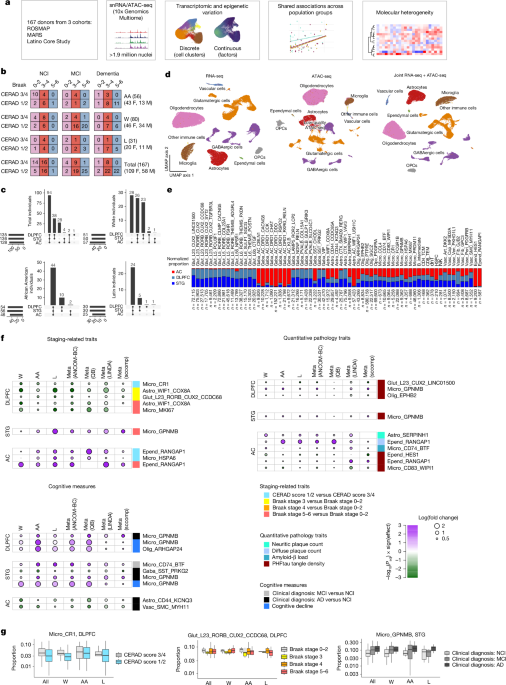
Researchers reporting in Nature say they have identified cell-type-specific molecular patterns linked to cognitive impairment and Alzheimer’s disease that appear across multiple population groups. The study focused on post-mortem brain tissue from African American, Latin and white individuals, aiming to clarify which biological signals are shared rather than limited to a single ancestry group.
To do that, the team used single-nucleus RNA sequencing and ATAC-seq, two methods that help map gene activity and chromatin accessibility at the level of individual cell types. This approach can reveal how neurons and other brain cells differ in Alzheimer’s disease, and how those differences relate to changes seen in cognition.
The report is notable because Alzheimer’s research has often struggled with limited population diversity. By analyzing samples from different groups, the authors were able to look for molecular signatures that are associated with disease across populations, helping separate broadly relevant Alzheimer’s biology from findings that might reflect narrower study populations.
The paper also draws on well-characterized post-mortem brain samples from aging studies referenced in the article, including ROSMAP. Overall, the findings add to efforts to build a more complete and inclusive picture of Alzheimer’s disease at the cellular level, with potential value for future biomarker research and treatment development.