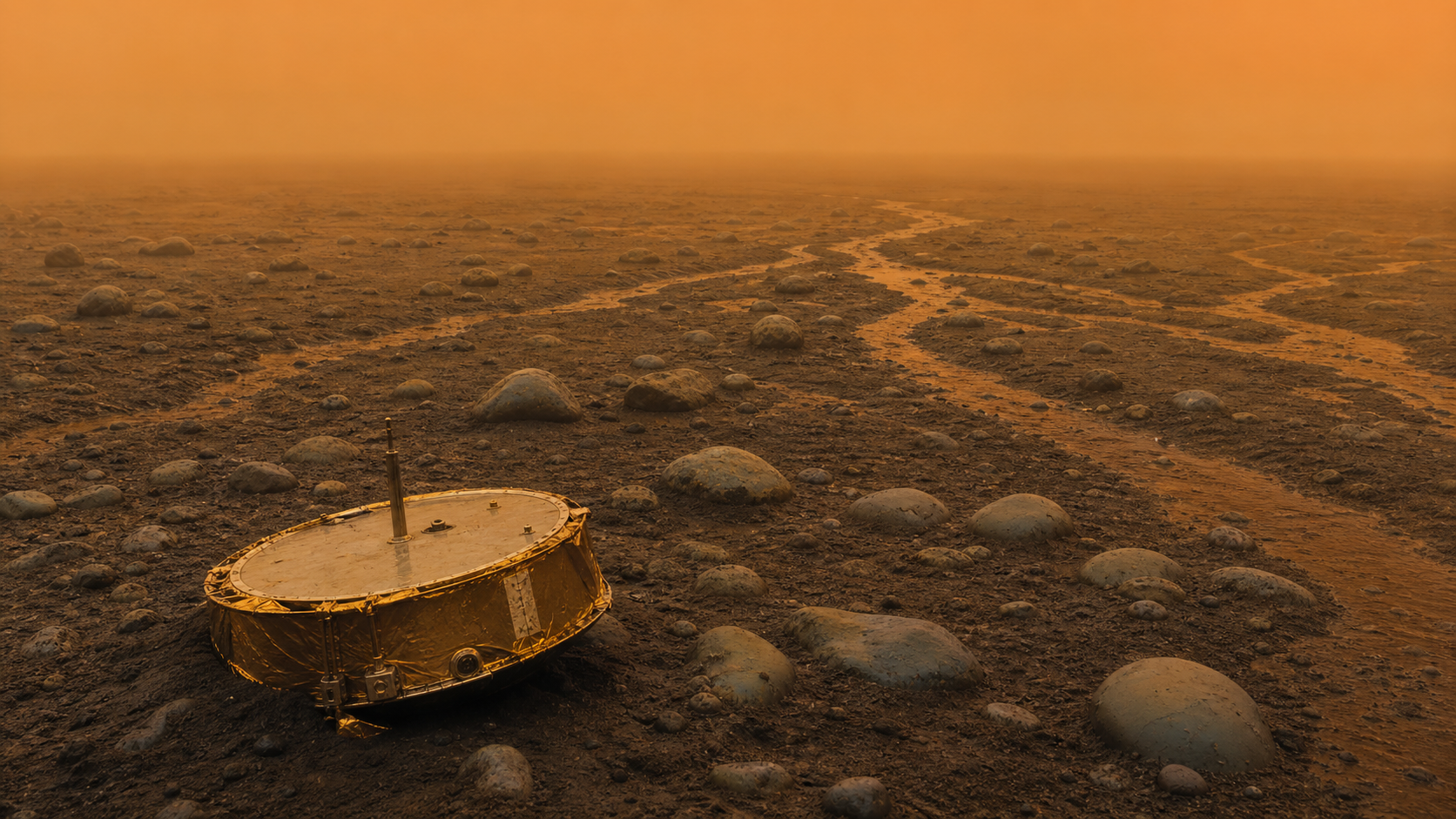
A small European probe made history on 14 January 2005 when it descended through Titan’s thick orange atmosphere and reached the surface of Saturn’s largest moon. The landing took place on a world nearly 1.5 billion kilometres from the Sun, after the craft broke through the haze that had long hidden Titan from clear view.
The achievement remains exceptional in space exploration. Titan is still the only place beyond Earth where a spacecraft has landed with liquid nearby on the surface, making the mission a rare chance to study an alien landscape that in some ways echoes familiar processes seen on our own planet.
After touchdown, the probe continued sending information for 72 minutes. Among the most memorable returns was the sound of wind in Titan’s atmosphere, giving scientists an unusually direct sense of conditions on a distant moon before the spacecraft finally fell silent for good.
The mission is still remembered as a landmark because it combined a difficult atmospheric descent with a successful surface landing in one of the Solar System’s most intriguing environments. Its brief stream of data helped deepen interest in Titan as a place where atmosphere, surface features and nearby liquids come together in ways found nowhere else beyond Earth.