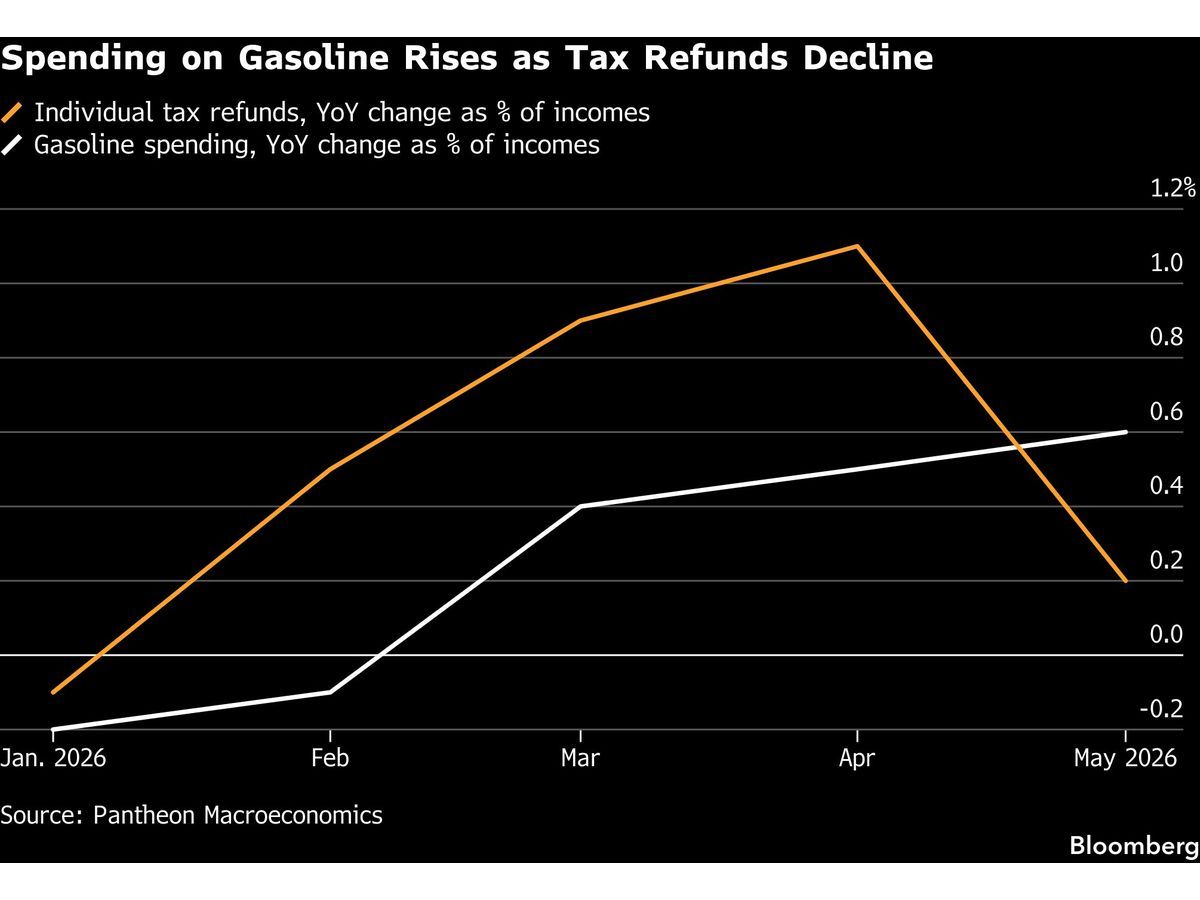
Americans are facing another round of higher gasoline prices, but the economic backdrop appears less forgiving than it was during the earlier surge tied to the Iran war. At that time, many households were able to absorb the increase with help from federal tax refunds, which provided an extra cushion for spending.
That support has now largely disappeared, making the latest rise in fuel costs more difficult for consumers to manage. With no similar buffer in place, higher prices at the pump could put more direct pressure on everyday budgets and leave less room for other purchases.
The shift matters because consumer spending has remained a key source of economic strength. Oliver Allen, senior US economist at Pantheon Macroeconomics, warned that the pace of spending seen so far may be hard to maintain if fuel costs keep climbing and household finances come under greater strain.
The renewed increase in gasoline prices is therefore being watched not just as an energy story, but as a broader signal for the US economy. If households start pulling back after absorbing another hit at the pump, it could weaken one of the main drivers that has helped keep economic activity resilient.