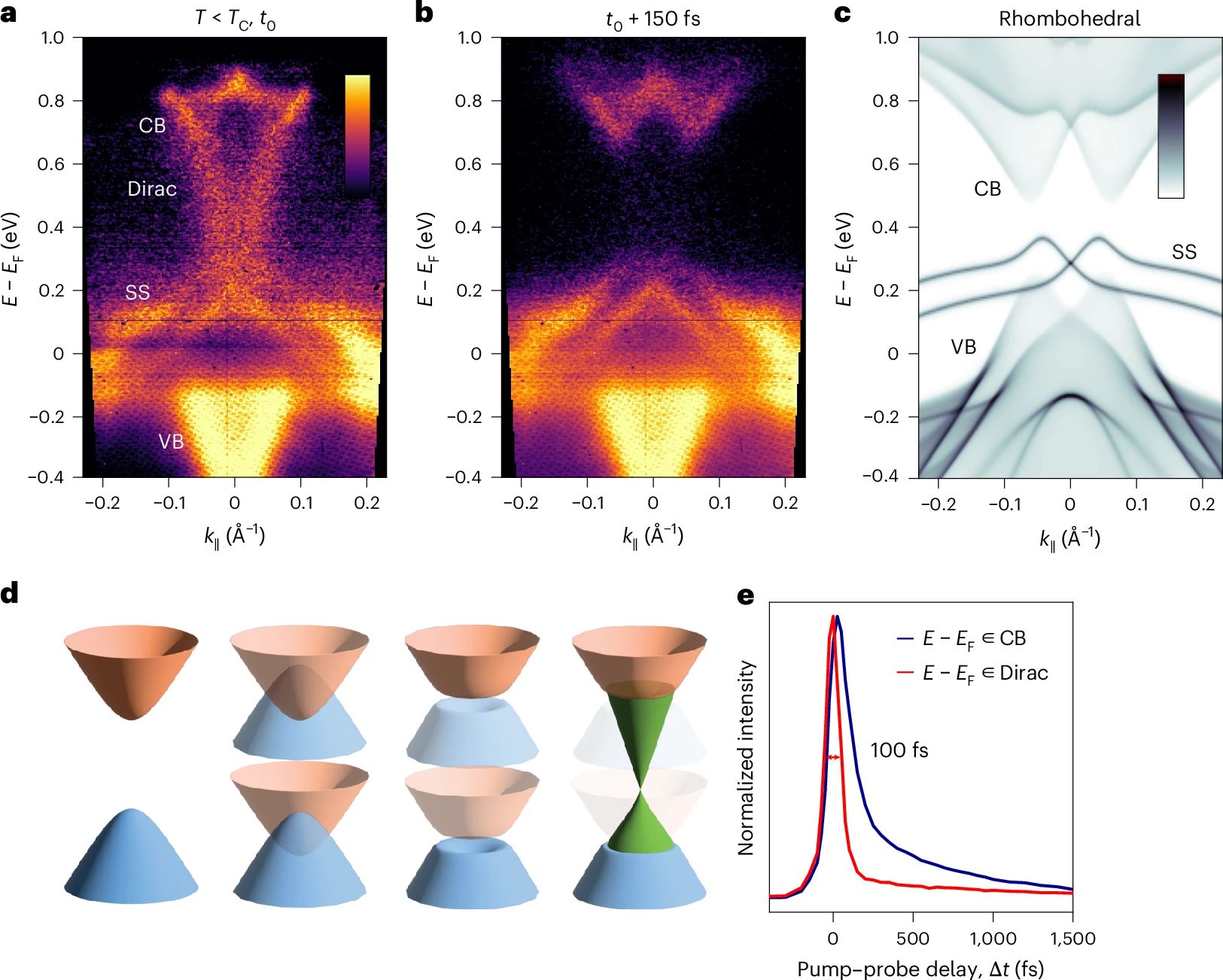
A Hackaday report highlights an idea that could change how electronic circuits are created: using a light-triggered Floquet topological insulator to form temporary pathways inside a material. Instead of permanently altering a base material such as silicon, this approach points to circuits that can be written, changed, and removed as needed.
Conventional semiconductor manufacturing depends on lasting modifications to control how electricity moves. The concept described here contrasts that fixed process with a material whose behavior can be switched by external stimulation. In this case, light is used to induce a temporary electronic state, opening the door to reconfigurable circuit patterns rather than hard-wired designs.
The key appeal of a Floquet topological insulator is that its useful properties may appear only while it is being driven in the right way. That means engineers could potentially "sketch" conductive routes with light, creating functional electronic structures without committing a material to one permanent layout. Such a method suggests more flexible prototyping and adaptive hardware designs.
While the trimmed report does not provide full experimental details, the broader takeaway is clear: researchers are exploring materials that behave very differently from standard semiconductors. If successful, light-controlled topological systems could offer a new path toward temporary circuits, tunable electronics, and devices that can be reconfigured on demand.