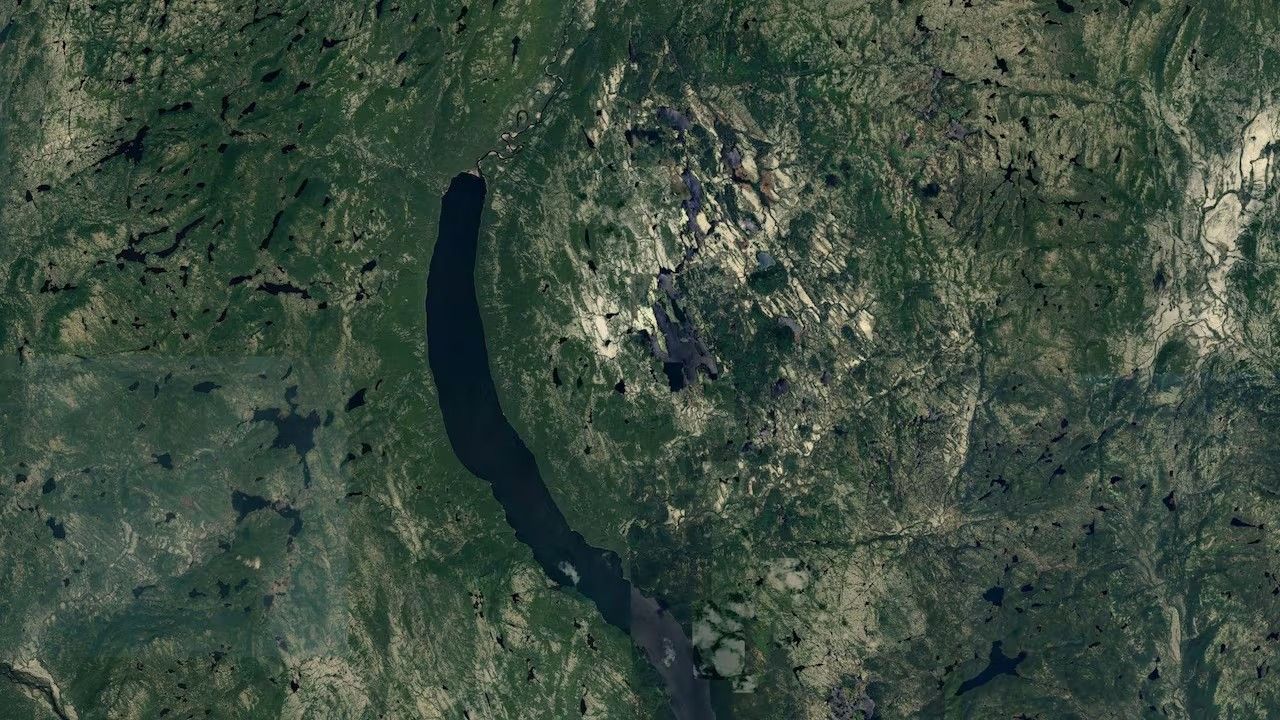
A large depression spotted on Google Maps by a hiker planning a camping route in Quebec has now been identified as an ancient meteor impact crater. The feature was noticed by Joël Lapointe while looking over the Côte-Nord region, turning a routine trip-planning search into a significant geological find.
Scientists have confirmed that the pit was formed by a meteor strike roughly 390 million years ago. That places the impact deep in Earth’s distant past, preserving evidence of an event that long predates modern landscapes and human history.
The discovery also highlights how widely available digital mapping tools can help bring attention to unusual natural features, especially in remote areas. In this case, a landmark first seen on a computer screen led to scientific confirmation of a crater created by a space rock collision.
Finds like this add to researchers’ understanding of Earth’s impact history and the geological record left behind by ancient strikes. What began as a simple Google Maps observation has now become a confirmed example of a meteor impact site in Quebec.