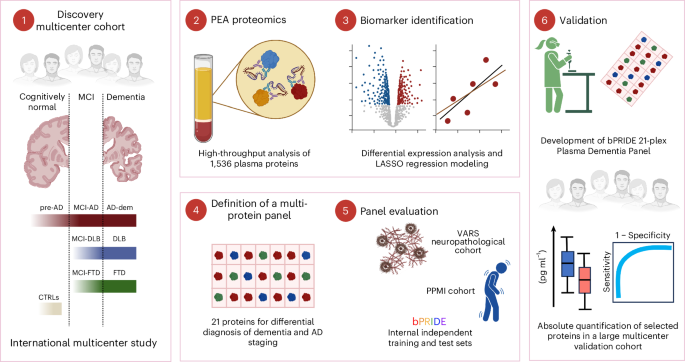
A new study published in Nature reports that plasma proteome profiling can identify blood biomarkers for neurodegenerative dementias. The research points to a way of using protein patterns in blood to improve the differential diagnosis of major dementia types, an area where symptoms can often overlap.
According to the study description, the large multicenter proteomics analysis found biomarker signatures that distinguish Alzheimer’s disease, dementia with Lewy bodies and frontotemporal dementia. That matters because these conditions can present with similar cognitive or behavioral changes, making accurate classification difficult without more specialized testing.
The findings also support molecular staging, suggesting that blood-based protein data may help map disease biology beyond a simple yes-or-no diagnosis. In practice, that could help researchers and clinicians better understand how different neurodegenerative dementias develop and how patients may be grouped by underlying molecular features.
Overall, the work adds to growing interest in biomarker-based diagnosis for brain disease. By showing that plasma proteins may separate several major forms of dementia, the study highlights the potential of less invasive tools to complement existing clinical assessments and advance more precise diagnosis of neurodegenerative disorders.