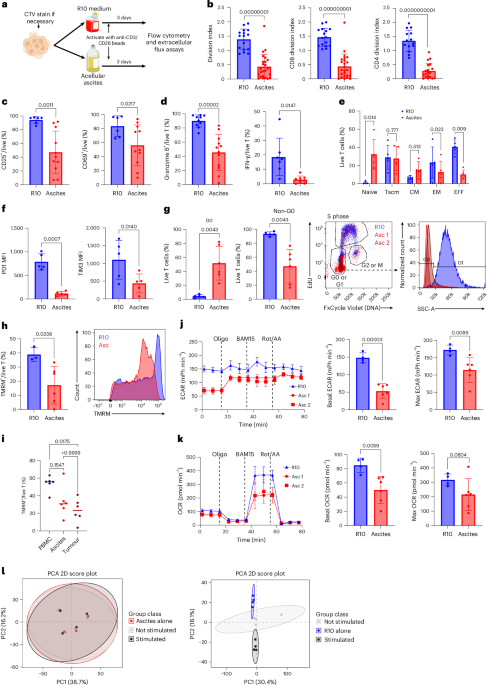
Researchers reporting in Nature describe how lipids found in ovarian cancer ascites may interfere with the immune system’s ability to mount an effective T cell response. Ascites, the fluid that can build up in the abdomen in advanced ovarian cancer, appears to contain lipid components that blunt T cell activation rather than simply serving as a byproduct of disease.
The study centers on T cell receptor, or TCR, dynamics. These receptor movements and interactions are essential for T cells to recognize threats and switch into an active state. According to the report, lipids present in ascites disrupt those TCR dynamics, which in turn weakens the activation process that immune cells need to attack cancer.
This finding adds to the understanding of why ovarian cancer can be such a difficult tumor environment for immune-based treatments. If the fluid surrounding tumors actively alters T cell behavior, that could help explain reduced immune effectiveness within the disease setting and highlight a previously important barrier created by the tumor microenvironment.
The translational significance is especially notable for adoptive T cell therapies, which rely on functional, responsive immune cells to target cancer. By showing that ascites-derived lipids can impair T cell signaling, the study points to a potential obstacle that may need to be addressed when designing or optimizing cell therapy strategies for ovarian cancer.