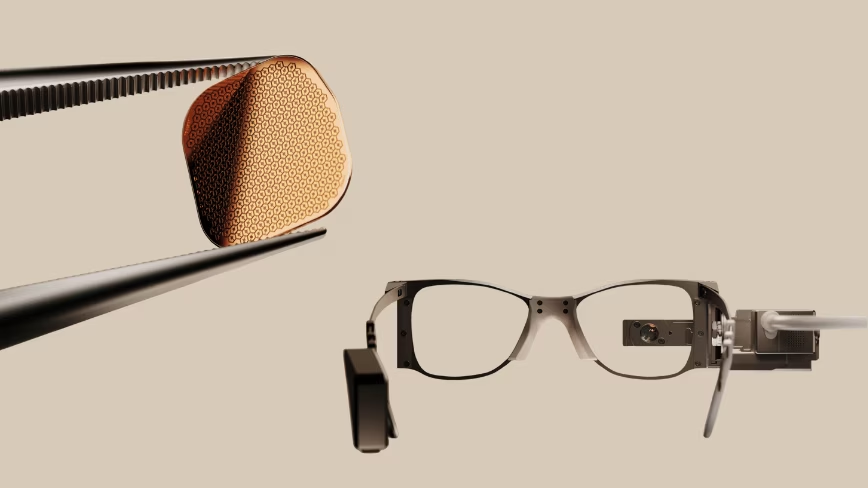
A retinal chip designed to help restore some sight is preparing to enter the European market, marking a notable step for people living with geographic atrophy. The condition is one of the most severe forms of age-related macular degeneration and gradually damages central vision, making everyday tasks such as reading and recognizing faces increasingly difficult.
For many patients, the disease causes the middle of their visual field to fade or blur over time. Current care can slow the progression in some cases, but there is no cure that fully reverses the damage. That is why a device aimed at bringing back a degree of useful vision is drawing attention.
The technology centers on a small implant placed in the eye, with the goal of helping people recover part of the sight lost as the retina deteriorates. While it is not presented as a full cure, the chip appears to offer a new option for patients who have had very limited alternatives beyond treatments that only delay further decline.
Its commercial rollout in Europe suggests the therapy is moving beyond the experimental stage and toward wider clinical use. For people affected by geographic atrophy, the launch points to a new phase in vision care where implants and other advanced tools may play a larger role in managing serious retinal disease.