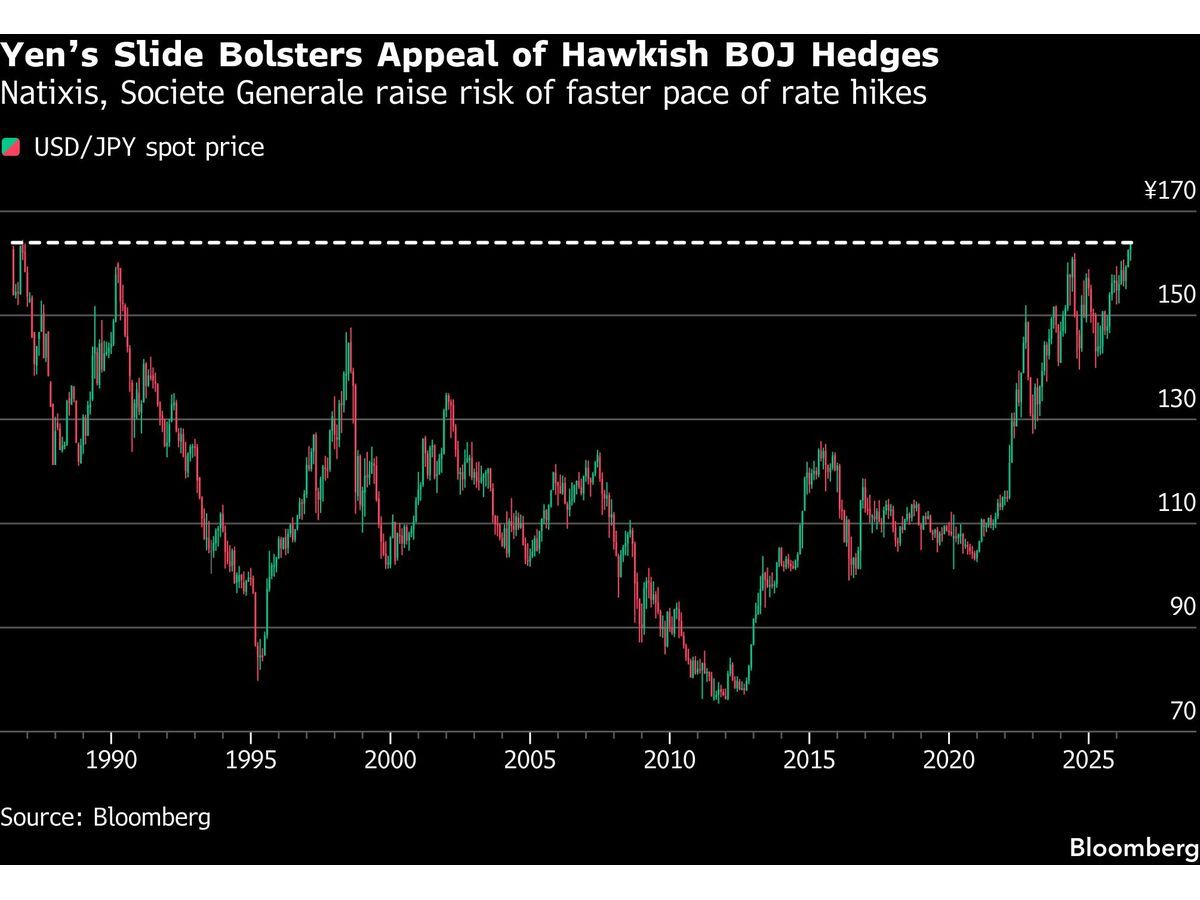
The yen’s sharp drop to a four-decade low is prompting renewed focus on how the Bank of Japan could respond. According to the report, a growing number of banks are advising traders to position for the possibility that the central bank may take a more hawkish stance than markets had been expecting.
That shift in advice reflects concern that a prolonged yen slide can change the policy debate in Japan. When the currency weakens this dramatically, investors often start reassessing whether the Bank of Japan can maintain its existing approach without increasing pressure on markets and the broader economy.
For traders, the message is less about predicting an immediate move and more about preparing for a change in tone or policy direction. Hawkish Bank of Japan hedges are becoming more attractive because they offer protection if officials signal tighter settings or a firmer response to the yen’s weakness.
The broader market takeaway is that currency volatility is once again driving speculation around Japan’s central bank. With the yen under pressure, expectations for the Bank of Japan are evolving, and banks appear to be telling clients that ignoring the risk of a hawkish turn may no longer be the safer trade.