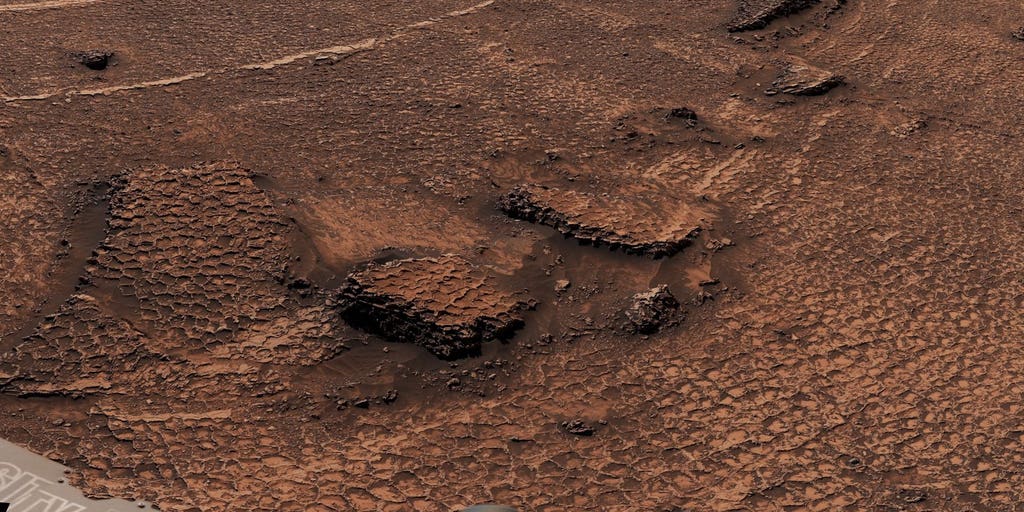
NASA’s Curiosity rover has returned striking new images from Mars showing unusual honeycomb-like patterns on the ground. The formations, identified as polygonal fractures, appeared as the rover continued its exploration of the planet’s dry, desert landscape.
According to the description shared with the images, the polygonal fractures measure roughly 1.5 to 3 inches across. Their tightly packed, repeating shapes give the surface a distinct honeycomb appearance, making the discovery stand out among the rover’s latest Mars photos.
Scientists are using the imagery and follow-up analysis to measure the shapes and better understand how these features formed. Studies of polygonal fractures can offer clues about past environmental conditions and the processes that have shaped the Martian surface over time.
The latest Curiosity rover images add another visually dramatic example of the varied terrain found on Mars. As the mission continues, observations like these help researchers piece together a clearer picture of the Red Planet’s geology.


![The US wins the right to say it's spent 'virtually all' of its long-range precision missiles during all the glorious Iranian war victories. So much victorying [Obvious]](https://img.fark.net/images/2013/site/farkLogo2Big.gif)