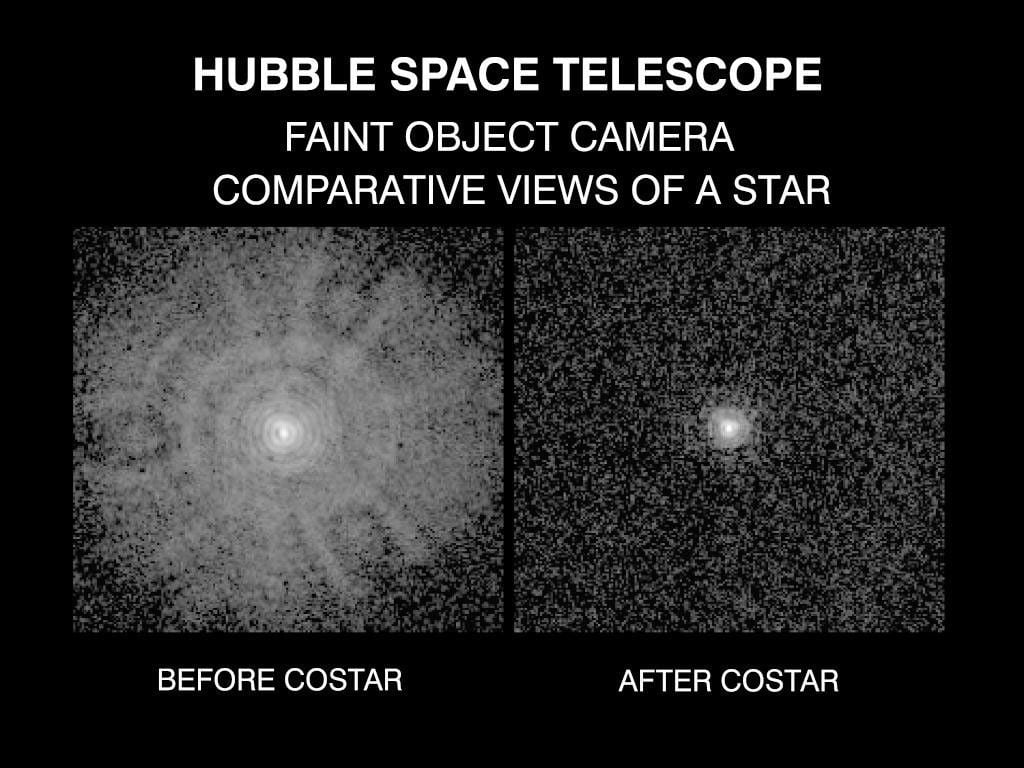
The Hubble Space Telescope is now known for some of the clearest and most influential images in astronomy, but its start in orbit was far from perfect. Early pictures came back with stars surrounded by fuzzy halos, and fine details that should have been sharp were badly blurred.
The problem was traced to Hubble’s mirror, which had been shaped incorrectly by an extraordinarily small amount — described as a fraction of the width of a human hair. Even that tiny flaw was enough to throw incoming light out of proper focus, undermining the performance of a telescope that had been expected to open a new chapter in space science.
Because Hubble was already in orbit, the mistake became a major and expensive setback. The solution came when astronauts carried out a repair mission that effectively gave the telescope a set of glasses, adding corrective optics to counter the mirror error and restore sharp vision.
That fix turned Hubble from an early disappointment into one of the most successful scientific instruments ever built. Its recovery showed how a precise in-orbit repair could rescue a billion-dollar mission and allow the telescope to deliver the crisp cosmic views it had promised from the beginning.