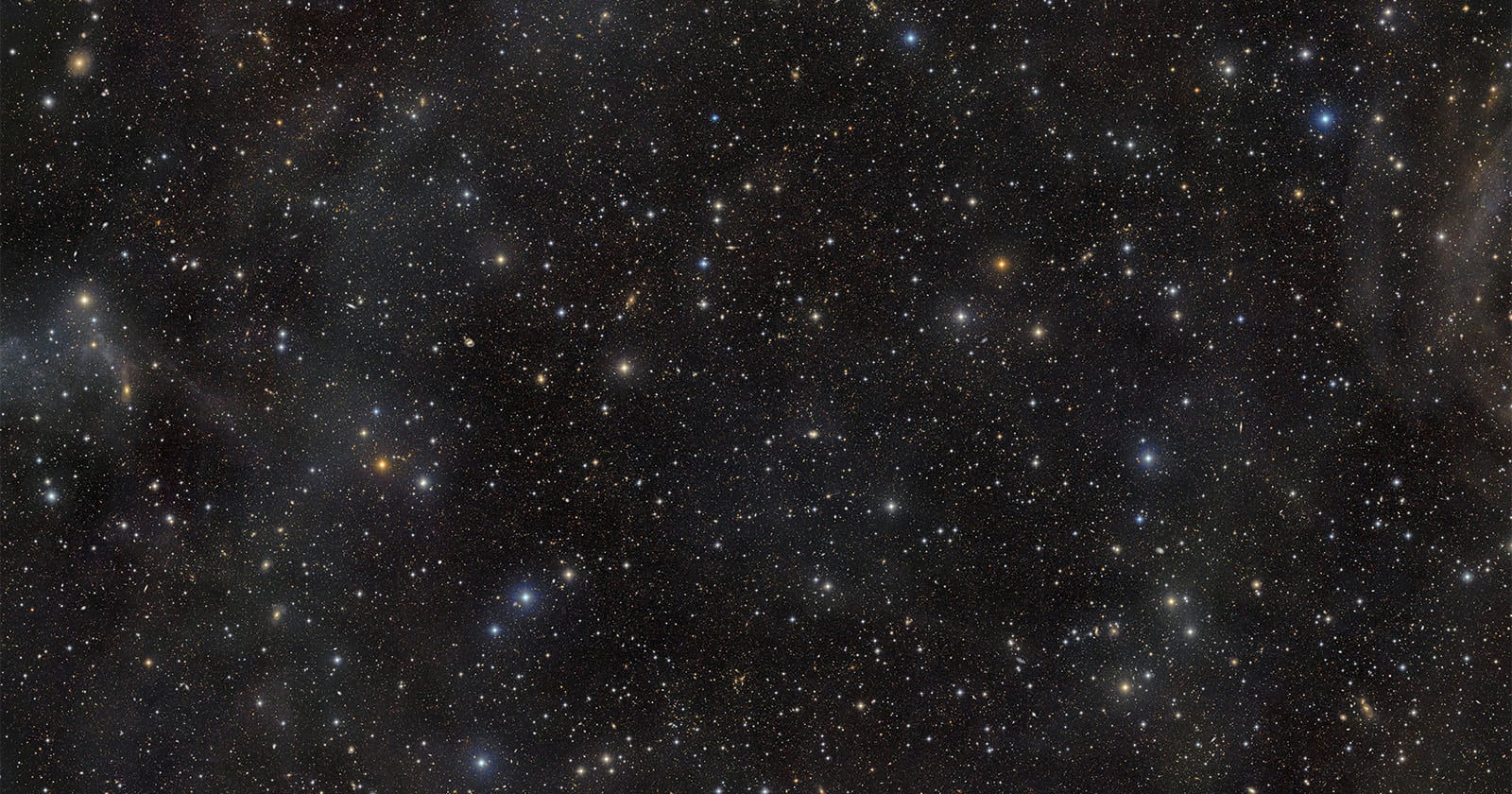
The NSF-DOE Vera C. Rubin Observatory has released a striking new deep-space image taken with its 3.2-gigapixel LSST camera, revealing more than half a million galaxies in a single frame. The image looks into a famous cosmic field and highlights the enormous scale of the observatory’s imaging power.
With 3,200 megapixels, the LSST camera is designed to record vast areas of the sky while still preserving fine detail. That combination allows astronomers to capture huge numbers of distant galaxies at once, turning one image into a dense map of the universe across many pixels.
The newly shared view underscores why the Rubin Observatory is drawing so much attention in astronomy and astrophotography circles. A deep image packed with hundreds of thousands of galaxies shows how the system can probe far beyond nearby stars and into regions filled with faint, remote objects.
Beyond its visual impact, the image points to the scientific value of the LSST camera as Rubin begins to explore the sky in unprecedented detail. By producing ultra-high-resolution observations of well-known fields, the observatory is expected to help researchers study galaxy distribution, cosmic structure, and other large-scale features of the universe.