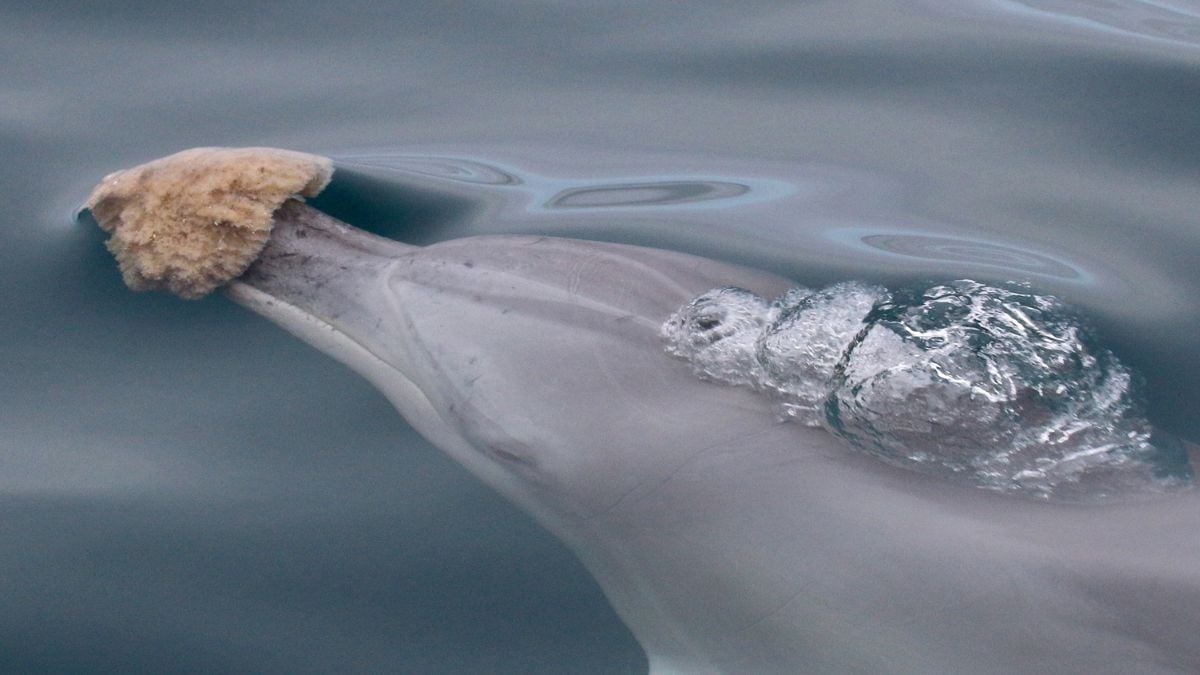
A small group of dolphins in Shark Bay, Australia, has drawn scientific attention for an unusual hunting method: using marine sponges to cover their snouts while searching the seafloor. The animals probe through sand to find fish hidden just below the surface, turning the sponge into a simple but effective tool.
That behavior was already notable because tool use is rare in the animal world and especially striking in wild dolphins. Now, the new report suggests the habit is tied to something distinctive in the dolphins' genes, adding a biological dimension to a behavior that looks learned and highly specialized.
The finding highlights how a very specific feeding strategy may shape more than daily survival. In this Shark Bay population, the sponge-assisted hunt appears to be associated with a unique genetic pattern, suggesting that unusual behaviors in the wild can leave a mark that goes beyond observation alone.
Researchers have long viewed Shark Bay as one of the most important places for studying dolphin behavior, and this latest work adds to that reputation. By linking tool use with genetic differences, the study offers a fresh look at how behavior, environment, and biology can interact within a small population of marine mammals.