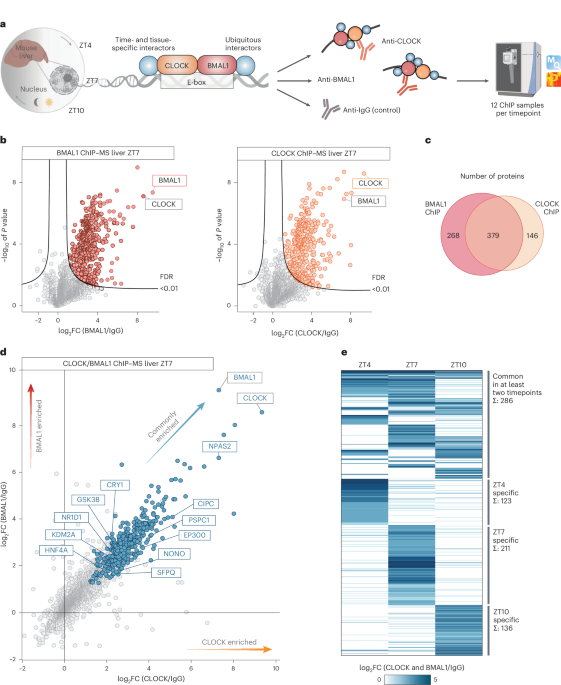
A Nature study reports that mapping the CLOCK/BMAL1 interactome across three mouse tissues has revealed a new layer of circadian control. The work focuses on chromatin-bound protein complexes formed by CLOCK and BMAL1, two core regulators of the body clock, and shows how their activity can be tuned in a tissue-dependent way.
According to the study summary, the researchers identified the homeodomain factors PROX1, HNF1B and HOXA5 as key cofactors. These proteins directly bind and co-occupy BMAL1 sites, suggesting that they help determine where and how circadian regulators act in different tissues rather than operating through a single universal program.
The findings help explain why circadian gene expression can vary widely from one tissue to another even though the central clock machinery is shared. By linking CLOCK/BMAL1 to tissue-selective homeodomain partners, the study outlines a mechanism for establishing tissue-specific circadian transcription at the chromatin level.
The research was carried out in male and female C57BL/6N mice maintained under controlled light-dark conditions. Taken together, the results point to PROX1, HNF1B and HOXA5 as important tissue regulators within the CLOCK/BMAL1 network and expand understanding of how local circadian programs are built in mammals.