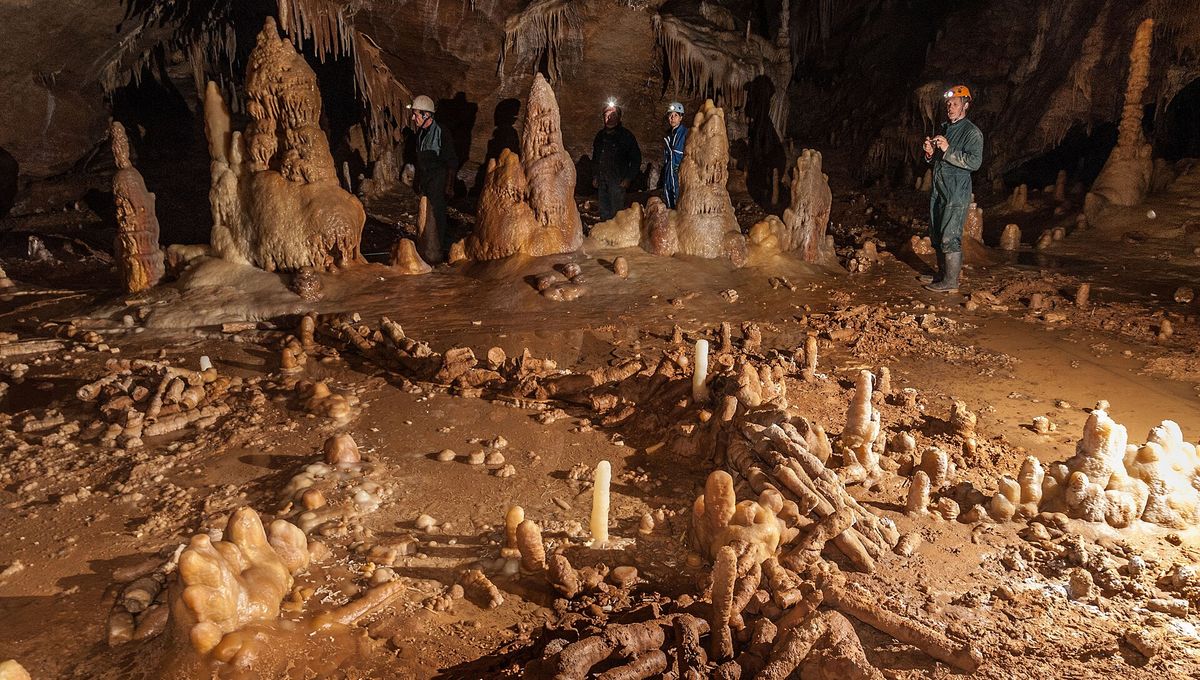
Archaeologists say a remarkable structure deep inside Bruniquel Cave shows that Neanderthals were building with purpose around 176,500 years ago. The formation, arranged in a circular pattern from broken stalagmites, is being described as unprecedented and could represent the oldest surviving structure known so far.
What makes the find especially striking is its age and location. According to the report, this was not the work of modern Homo sapiens, but of Neanderthals operating far inside a cave environment. That suggests planning, movement through darkness, and a level of organization that challenges older assumptions about how these ancient humans lived.
The Bruniquel Cave site has long stood out as an archaeological mystery, and the new attention on it centers on what the structure reveals about Neanderthal behavior. A deliberately built circular arrangement made from cave formations points to more than simple shelter use. Researchers see it as evidence of complex activity taking place underground much earlier than many people would expect.
If that interpretation holds, the Bruniquel Cave construction may reshape discussions about the earliest known architecture and the abilities of Neanderthals. Rather than viewing them as primitive compared with later humans, the site adds to growing evidence that they could plan, build, and leave behind sophisticated traces of their presence.