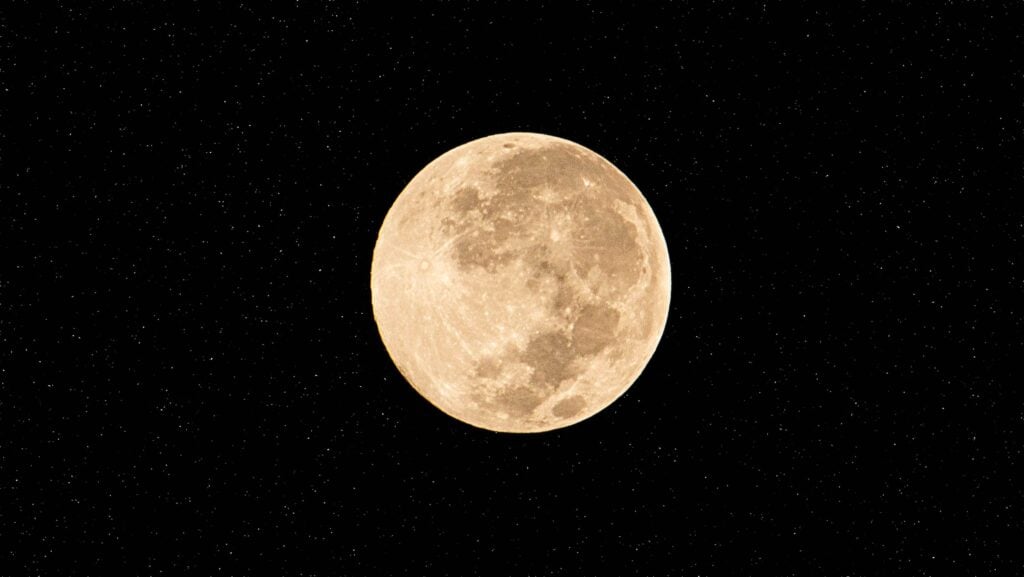
The Moon is not entirely airless. A faint exosphere surrounds it, containing helium, neon and argon at a density estimated at roughly one quadrillionth of Earth’s molecular density.
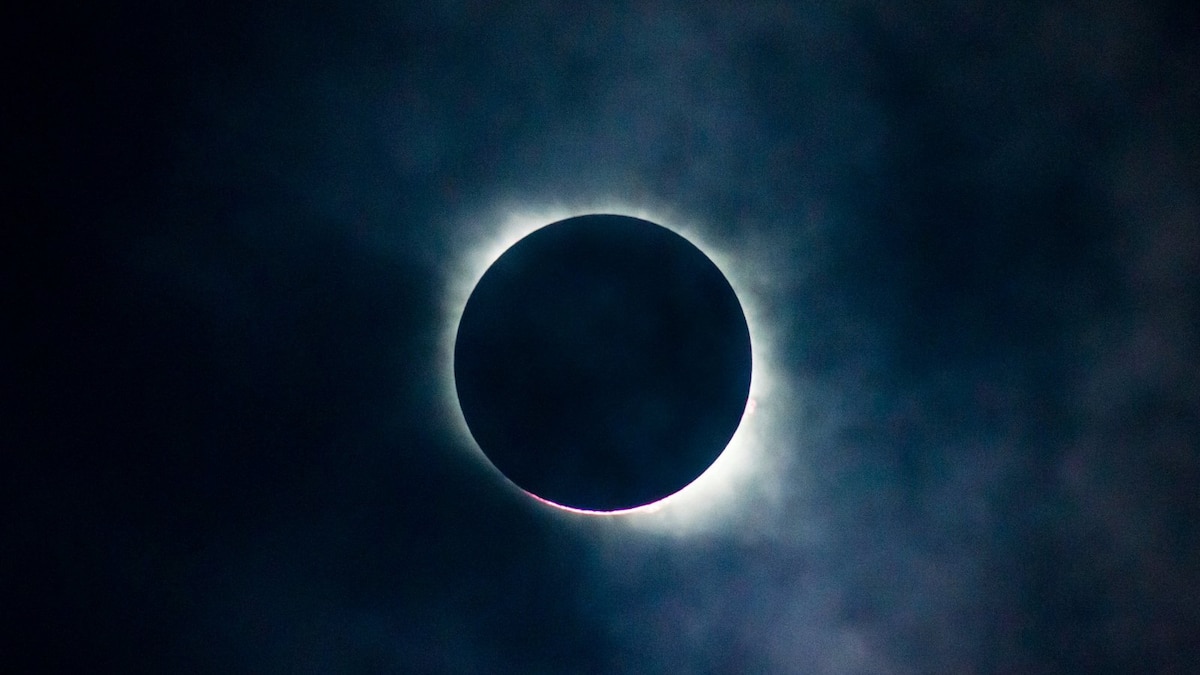
That environment is far too thin to support breathing or behave like a conventional atmosphere. The lunar sky remains black in daylight, and the absence of substantial air explains why familiar effects such as wind and freely moving flags do not occur on the surface.
Despite its extreme thinness, the exosphere can still be important for lunar science. The gases provide clues about the Moon’s near-surface environment and show that even an apparently empty world has a measurable gaseous boundary.
The surrounding material is so sparse that a single lander can briefly become the dominant feature in the gas near it. This highlights how spacecraft operations can alter observations of the fragile lunar exosphere, even when the Moon’s wider environment remains extraordinarily close to a vacuum.