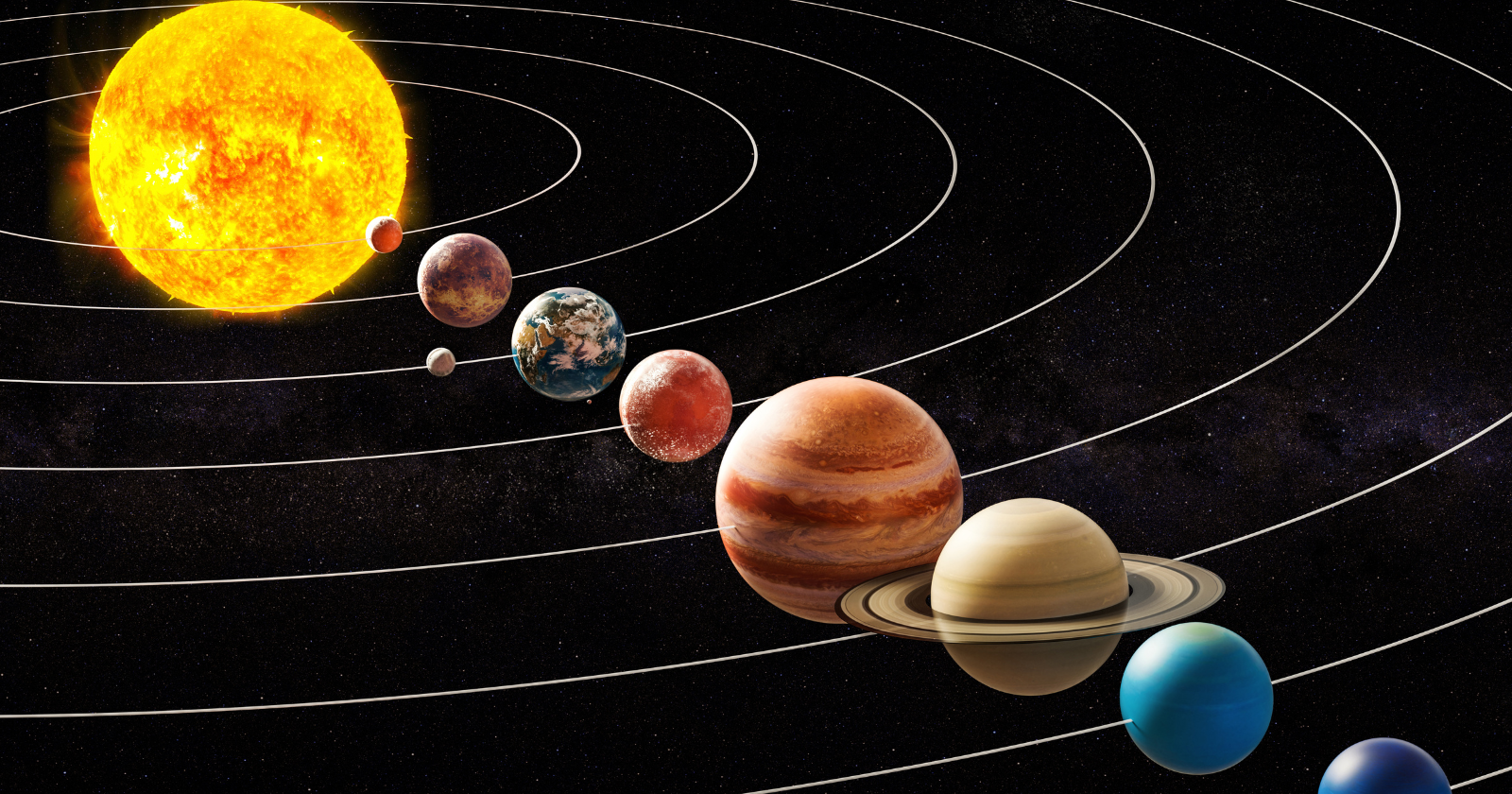
The familiar picture of the solar system as a neat line of planets gives a badly distorted sense of what is really out there. Those classroom-style diagrams make the worlds look evenly arranged and relatively close together, when the actual system is dominated by empty space and huge differences in scale.
At the center of it all is the Sun, which contains about 99.86 percent of the solar system’s mass. That means the planets, moons, asteroids and other objects make up only a tiny fraction of the total. In simple terms, the solar system is far less a collection of equal members than a vast region ruled almost entirely by one star.
The idea of a clean outer boundary is also misleading. Voyager 1 reached interstellar space in 2012, a major milestone, but that does not necessarily mean it passed the solar system’s true end. The outermost reaches influenced by the Sun may stretch much farther, possibly more than a light-year beyond where the spacecraft crossed into interstellar space.
Astronomers are also still investigating whether an undiscovered planet may exist in the distant solar system. Often referred to as Planet 9, the suspected world remains unconfirmed, but its possible presence adds to the sense that our planetary neighborhood is not fully mapped. Far from the tidy diagram many people know, the solar system remains vast, uneven and full of unanswered questions.